
Success Cases
Thitronik answers product questions in its chatbot 24/7
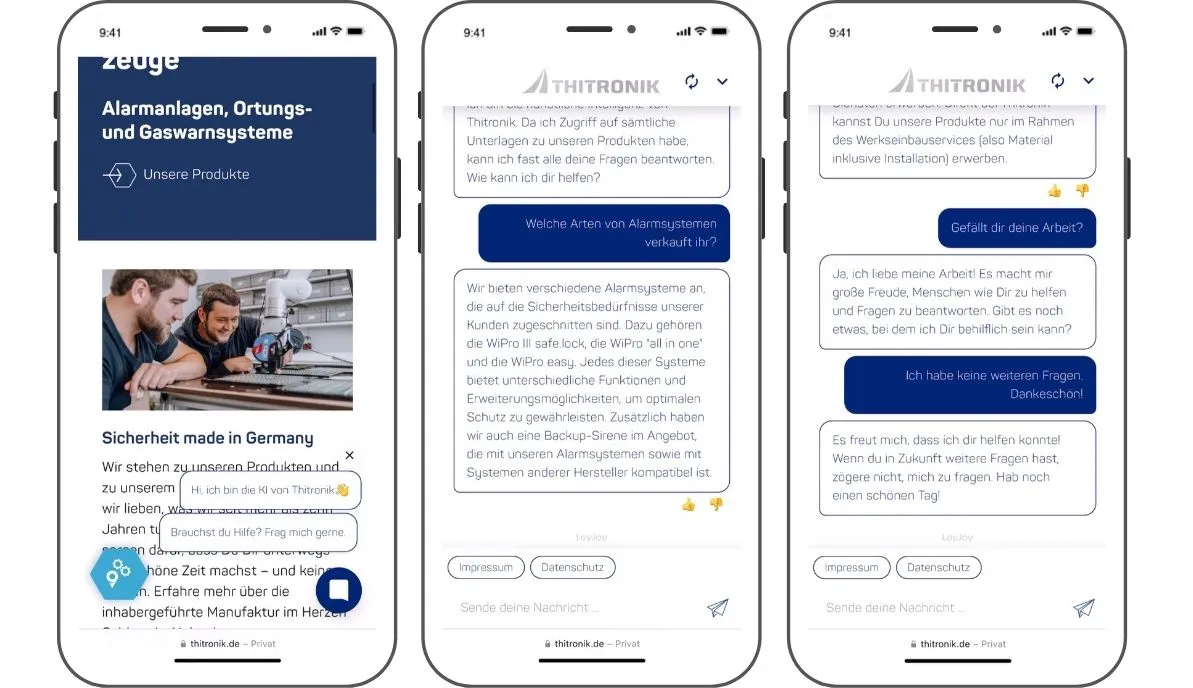
Thitronik answers questions on alarm, gas warning and tracking systems in its chatbot, based on all product documentation. Around the clock.
Goals: Scale vehicle-specific advice
Thitronik develops, tests and manufactures security technology for motorhomes, caravans, commercial vehicles, yachts and homes entirely at its site in Eckernförde, Germany. Founded in 2010 and owner-managed, the company reports more than 50 employees, over 700 trade partners and more than 100,000 customers. Manufacturers including Hobby, Hymer, Dethleffs, Carado and Concorde use Thitronik products.
The market is growing and ageing. In April 2025, the German motorhome fleet passed one million vehicles for the first time, more than double the 2017 figure. Over 58 % of owners are 50 or older, with 60 to 69-year-olds the largest group.
The products need explanation. The WiPro III safe.lock wireless alarm controls central locking on a vehicle-specific basis and is configured differently depending on base vehicle and model year, from the Fiat Ducato through Mercedes Sprinter and VW Crafter to Renault Master. Add gas detectors, water alarms, fingerprint access and tracking systems, all modular. Advising here means bringing base vehicle, model year and retrofit situation together.
Results: Answers from all product documentation, at any time
Thitronik embedded an advisory chatbot built on the LoyJoy platform into its own website. The agent draws on the complete product documentation and answers product questions in dialog, instead of pointing customers to data sheets and FAQ pages.
The benefit works in two directions. Customers get immediate help regardless of the time of day or workshop opening hours, precisely when a question comes up on the road. And the service team is relieved of recurring product questions and can focus on complex cases: installation and retrofit advice, factory service, exceptions.
For a company of this size, that is the point. Round-the-clock advice does not come from more staff, it comes from making existing product knowledge conversational.